Ingredient Guide
Coconut Casework: Milk, Cream or Cream of Coconut?
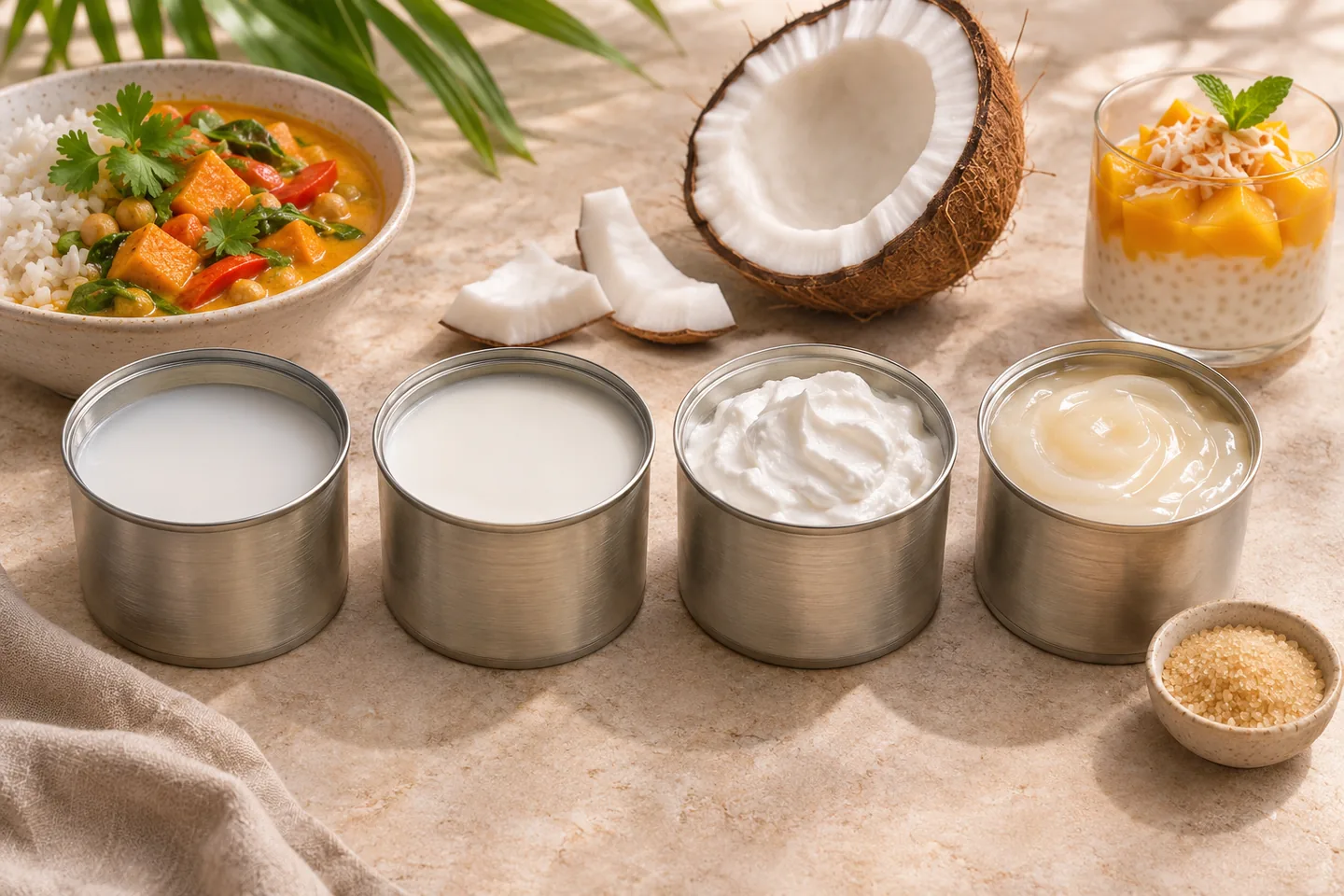
Three near-neighbour names can steer dinner in very different directions. Follow the common name, fat line and sugar clue to pick the right coconut can.
The coconut shelf has a naming problem worthy of a tiny detective novel. Coconut milk, light coconut milk, coconut cream and cream of coconut can sit within arm’s reach, yet one belongs in a curry while another can turn that curry into pudding. The fastest way through the case is to read the common name first, then check fat and sugar.
Start with the unsweetened family. The Codex Alimentarius standard for packaged aqueous coconut products—amended most recently in 2024—describes light coconut milk, coconut milk, coconut cream and coconut cream concentrate. They are emulsions made from coconut kernel and water, or reconstituted from specified coconut ingredients. Importantly, the standard says it does not cover sweetened or flavoured coconut milk or cream.
Within that standard, the names form a concentration ladder. Light coconut milk has a minimum of 5% fat; coconut milk, 10%; coconut cream, 20%; and coconut cream concentrate, 29%. Their minimum total-solids levels rise in the same order. Those are Codex composition benchmarks, not a promise that every can in every country will have exactly those numbers, but they explain why the products do different work.
More coconut solids and fat generally mean more body and richness. Light coconut milk can keep a soup or broth relatively delicate. Coconut milk brings fuller texture to curries, rice and stews. Unsweetened coconut cream is the heavier tool for rich sauces, dessert fillings or recipes that need less added water. Those kitchen roles are practical inferences from the composition ladder; the recipe and the actual label still get the final vote.
Now for the name that flips the plot: cream of coconut. It is commonly a sweetened preparation, not merely coconut cream with its words rearranged. Grace Foods Canada, for example, describes Coco López cream of coconut as sweetened and specifically says it is not a substitute for coconut cream in Thai or other Southeast Asian cooking. Its listed ingredients begin with coconut, sugar and water. Goya’s version likewise lists coconut milk and sugar and positions the product for sweet drinks and desserts.
A three-part shelf check keeps the cans in their lanes. First, read the exact common name on the front. Canadian rules require a common name on the principal display panel of most prepackaged foods. Second, turn the package around: Canadian ingredient lists run in descending order by weight, so sugar near the beginning is a strong clue that you have entered dessert territory. Third, compare grams of fat and sugars using the same serving size rather than judging by the word ‘creamy.’
Do not use the length of the ingredient list as a concentration meter. Codex permits certain emulsifiers and stabilizers in its coconut-milk and coconut-cream categories, and brands formulate differently. A gum may help keep water and fat suspended; it does not by itself tell you whether the product is light, rich or sweet. The product name, nutrition numbers and ingredient order work better as a team.
If a recipe calls for unsweetened coconut cream, sweet cream of coconut is usually the wrong understudy because it changes both sugar and texture. If it calls for coconut milk, switching to light milk can make the result thinner, while coconut cream can make it richer. Diluting cream with water may be a workable kitchen adjustment, but it is an approximation because formulations vary.
The closing clue is wonderfully simple: light coconut milk for a lighter savoury base, coconut milk for everyday creamy cooking, unsweetened coconut cream when richness is the assignment, and cream of coconut when deliberate sweetness belongs in the plan. Same fruit, four labels, far fewer surprise puddings.
Sources
- https://www.fao.org/fao-who-codexalimentarius/sh-proxy/en/?lnk=1&url=https%3A%2F%2Fworkspace.fao.org%2Fsites%2Fcodex%2FStandards%2FCXS+240-2003%2FCXS_240e.pdf
- https://inspection.canada.ca/en/food-labels/labelling/industry/common-name
- https://inspection.canada.ca/en/food-labels/labelling/industry/list-ingredients-and-allergens
- https://gracefoods.ca/product/coco-lopez/
- https://www.goya.com/en/products/goya-cream-of-coconut/
You may also like these