Cooking Technique
Scrape Expectations: Turn Browned Bits into a Pan Sauce
Those golden-brown marks left after searing vegetables are not a dirty-pan problem. With liquid, gentle scraping and a short simmer, they can become the beginning of dinner’s sauce.
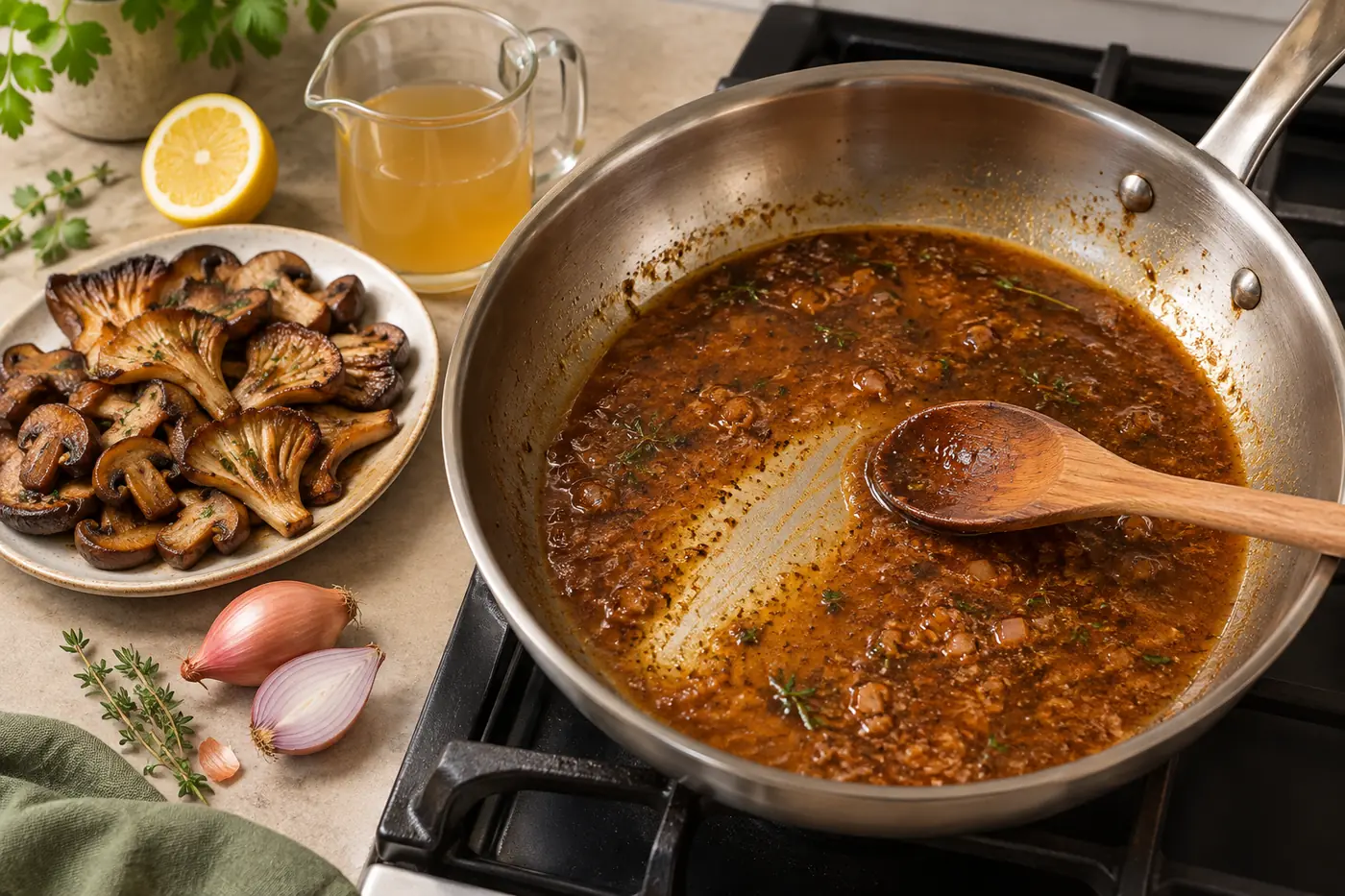
Lift a batch of deeply browned mushrooms or tofu from a skillet and the pan may look ready for the sink. Look again. The coppery patches stuck to the cooking surface are called fond, and they are concentrated building blocks for a quick pan sauce.
Fond forms while food browns against a hot surface. One contributor is the Maillard reaction, a web of reactions between amino groups and reducing sugars that creates colour plus many aroma and flavour compounds. Temperature, time, moisture and the food itself all influence the result, so fond from mushrooms will not taste exactly like fond from onions, tofu or cabbage.
Colour is the first checkpoint. Golden through deep brown is useful. Black, smoking residue is burnt, and adding liquid will not turn bitterness back into toastiness. If the pan smells acrid, wash it and begin the sauce in a clean pan instead of trying to rescue it.
Deglazing is the useful next move. Remove the browned food, pour off any pool of oil and return the pan to medium heat. Add a modest splash of water, unsalted vegetable broth, tomato juice or another recipe-friendly liquid. As it bubbles, scrape the surface with a wooden spoon or silicone spatula. The liquid loosens and dissolves the cooked particles so their flavour moves from pan to sauce.
Despite a popular restaurant association, wine is optional. Water gives the clearest taste of the fond; broth adds another flavour layer. A spoonful of citrus juice or vinegar can brighten the finished sauce, but strong acid is best added gradually. The pan needs enough liquid to lift the fond, not a flood that turns a two-minute sauce into soup.
Reduction is a separate step. Once the fond is loose, simmer the liquid until some water evaporates and the flavour becomes more concentrated. Reduction can add a little body, but it does not guarantee a thick sauce. For extra silkiness, take the pan off the heat and whisk in a teaspoon of tahini, mustard or cold vegan butter. A starch slurry works too, but it should be measured rather than tossed in dry.
Try this small practice run after sautéing about 400 grams of mushrooms: remove the mushrooms, lower the heat, add 125 millilitres (1/2 cup) low-sodium vegetable broth and scrape until the pan is smooth. Simmer for 2 to 4 minutes, until roughly one-third cup remains. Turn off the heat, whisk in 1 teaspoon Dijon mustard and 1 teaspoon lemon juice, then return the mushrooms just long enough to coat them.
Stainless steel makes fond easy to see, while a non-stick surface usually produces less of it. Whatever the pan, avoid adding liquid to a deep pool of very hot oil: pour off excess fat first, lower the heat and add the deglazing liquid carefully because steam rises quickly.
The practical rhythm is simple: brown, judge the colour, remove the food, deglaze, scrape, reduce and finish. Once that sequence feels familiar, a pan that looks used can start looking like the first draft of a sauce.
Sources
You may also like these