Food Processing
Smoke Gets in Your Sauce: How Liquid Smoke Captures a Fire
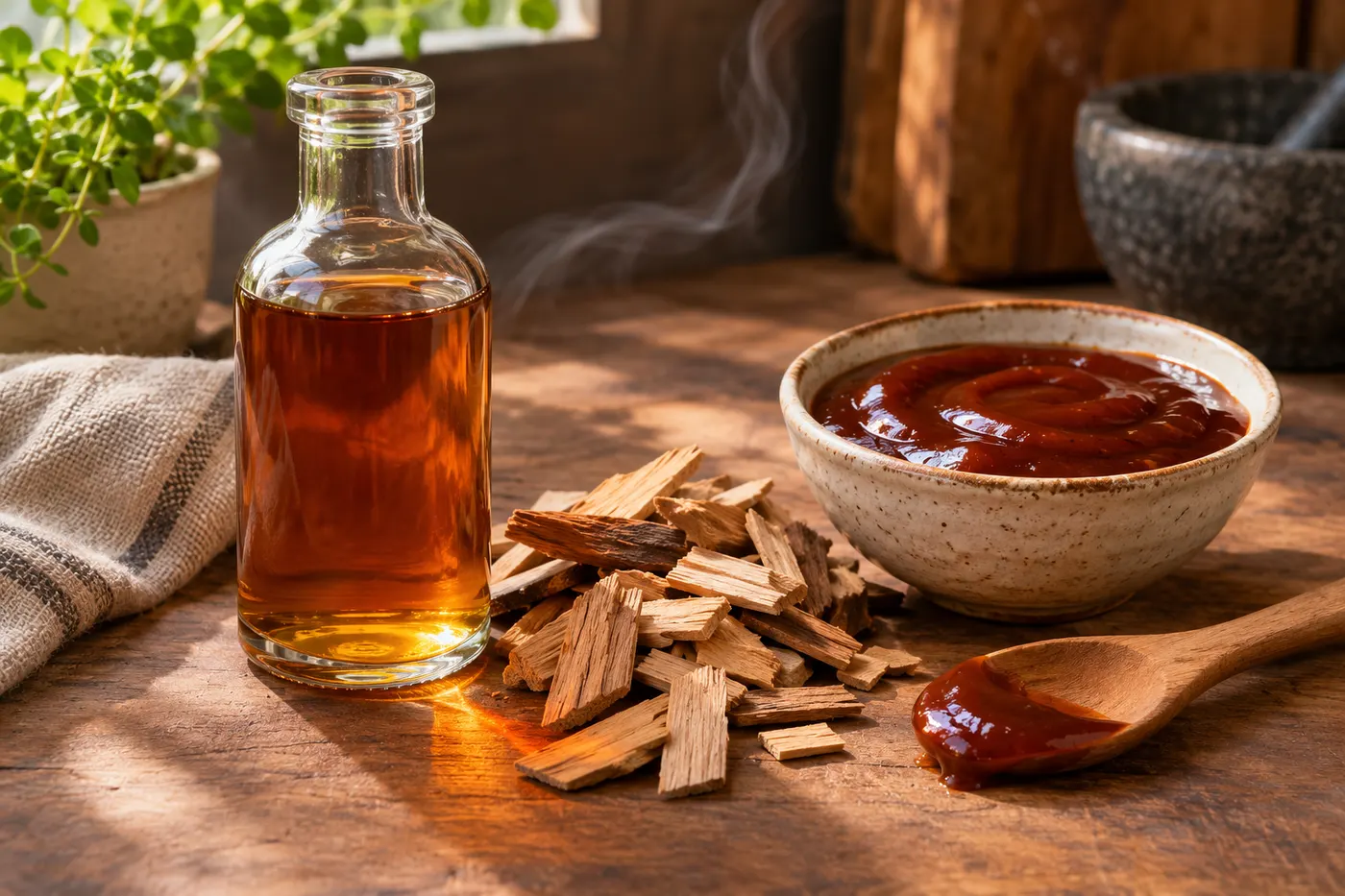
That little bottle begins with real wood smoke; condensation, separation and careful refining turn the drifting cloud into a pourable ingredient.
Liquid smoke sounds like a pantry prank: take something that floats away, put it in a bottle, and somehow keep the campfire. Yet the name is surprisingly literal. Food-grade liquid smoke begins with real wood heated under controlled, oxygen-limited conditions, then captures part of the resulting vapour as a liquid.
The first act is pyrolysis. Wood chips or sawdust are heated with too little oxygen for an ordinary flame, so the wood breaks down and releases a complicated stream of gases, vapours and particles. A 2026 scientific review describes commercial production as a controlled sequence of wood preparation, rapid heating, condensation and purification rather than a jar held over a bonfire.
Next comes the bottle-able bit. The hot vapours travel through condensers, where cooling turns part of the stream into liquid. The crude condensate separates into watery, oily and tarry fractions. Producers then use settling, fractionation, centrifugation or filtration—depending on the process—to keep the useful smoke-flavour fraction and reduce unwanted material. The result may be aged, concentrated, diluted or dried into a powder for different food applications.
What survives gives liquid smoke its flavour vocabulary. Analyses of commercial products have found phenolic compounds including guaiacol and syringol, which contribute recognizably smoky aromas. Carbonyl compounds help build colour and sweet, roasted notes, while organic acids add sharpness. The exact balance changes with the wood species, its moisture, the temperature and the time spent in the smoke generator, so hickory-style and other products need not taste identical.
That also explains why liquid smoke can flavour more than a surface. Manufacturers can spray it onto food, mix it into a sauce or brine, or use a dry form in a seasoning blend. At home, a food-grade bottle can bring a smoky edge to bean chili, tofu marinade, mushrooms, baked beans or roasted vegetables without running an outdoor smoker.
The practical rule is restraint. Product strengths vary, and smoky phenols announce themselves quickly, so begin with the label’s smallest suggested amount, stir, taste and add more only if needed. It is much easier to invite another wisp than to chase a bonfire out of dinner.
Commercial liquid smoke is a manufactured food ingredient, not a reason to collect homemade soot-water. Buy a product labelled for food use and follow its directions. The fun fact remains: the aroma in that tiny bottle did not merely imitate smoke—it took the scenic route from wood, to vapour, to condensate, to sauce.
Sources
You may also like these