Food Trends
Beyond the Beep: Why Food Barcodes Are Going Two-Dimensional
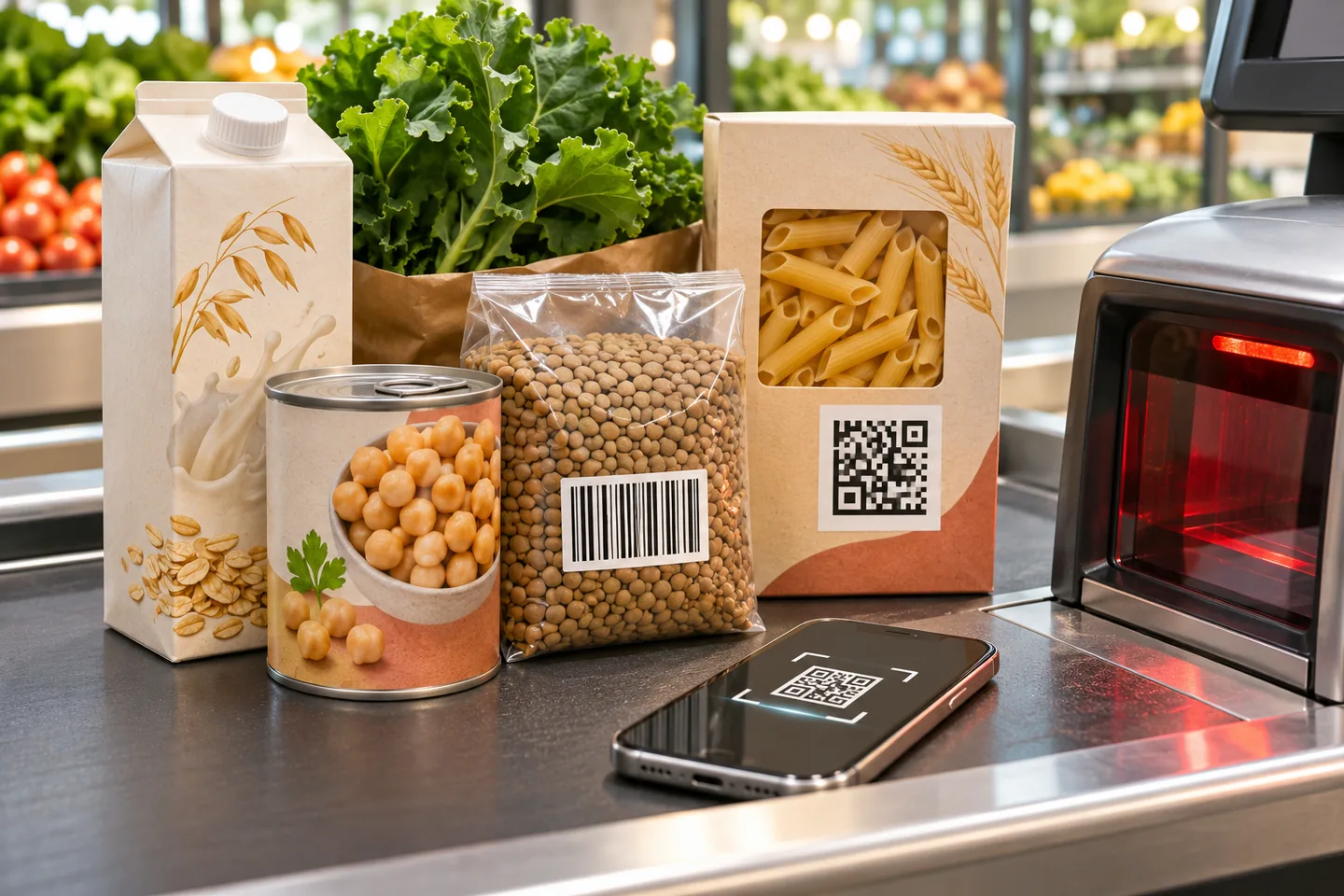
The familiar stripes are getting a square-shaped companion. GS1’s 2027 goal could let one food-package code serve checkout, traceability and useful online information.
The barcode on a tin of chickpeas has performed one excellent trick for decades: point a scanner at the stripes and the till identifies the product. Now food packages are beginning to add a second, squarer performer. Two-dimensional barcodes can carry more information than the familiar lines and, in some forms, connect the package to the web.
The difference starts with capacity. A standard EAN or UPC barcode used at checkout carries a Global Trade Item Number, or GTIN—the identifier that tells a retail system which product is passing the scanner. GS1’s retail guidance says the one-dimensional format does that job reliably, but its limited space makes it awkward to add details that vary from one production run to another.
A GS1-compliant 2D code can still carry the GTIN while adding fields such as a batch or lot number, a serial number, or a best-before, sell-by or expiry date. That does not mean every square code contains all of those facts. The brand chooses the data needed for a particular use, and the retailer’s equipment and software must know how to read and act on it.
There is more than one kind of square in this story. GS1 DataMatrix is widely used for machine-readable supply-chain information. QR Code and Data Matrix can also use GS1 Digital Link, a standard that represents product identifiers inside web addresses. With that structure, the same code can identify an item for business systems and lead a phone to online material such as ingredients, allergen information, recycling instructions or product details.
The timetable is ambitious but easy to misread. GS1’s industry goal, called Ambition 2027, is for retail point-of-sale systems around the world to be capable of reading a GTIN from both existing linear barcodes and GS1-compliant 2D barcodes by the end of 2027. It is a readiness target for scanners and software, not a decree that every grocery package must lose its stripes on New Year’s Eve.
In fact, the overlap is already part of the plan. During the transition, a package may show both a linear barcode and a 2D code carrying the same GTIN. GS1’s latest implementation guideline says the old format may remain alongside the new one—or remain on its own—even after 2D scanning becomes widespread. For now, the double-code look is a compatibility bridge, not a printing mistake.
Why bother with the extra square? If a code includes lot and date data, a retailer can design systems that distinguish one batch from another, apply date-based actions or handle a targeted recall more precisely. Linked information can also be updated online without squeezing another paragraph onto a small label. These are capabilities, not automatic outcomes: a 2D symbol cannot improve traceability, reduce waste or inform shoppers unless the underlying data is accurate and the connected systems actually use it.
For shoppers, the practical move is simply to notice what the package asks you to do. A QR code meant for people will usually sit near a short invitation or explanation; scanning it should open a recognizable product or brand destination. A compact DataMatrix may be intended only for supply-chain equipment, and not every phone camera reads every format. The square shape alone is not a promise about what lies inside.
The classic checkout beep is therefore learning a bigger vocabulary. The old stripes are still perfectly capable of naming the product, while the newer squares can carry a small production biography or point toward a living page of information. The future food label may not shout more—it may simply pack more meaning into a centimetre of dots.
Sources
You may also like these