
Grocery Know-How
Carton Call: What ‘Fortified’ Adds to Plant Drinks
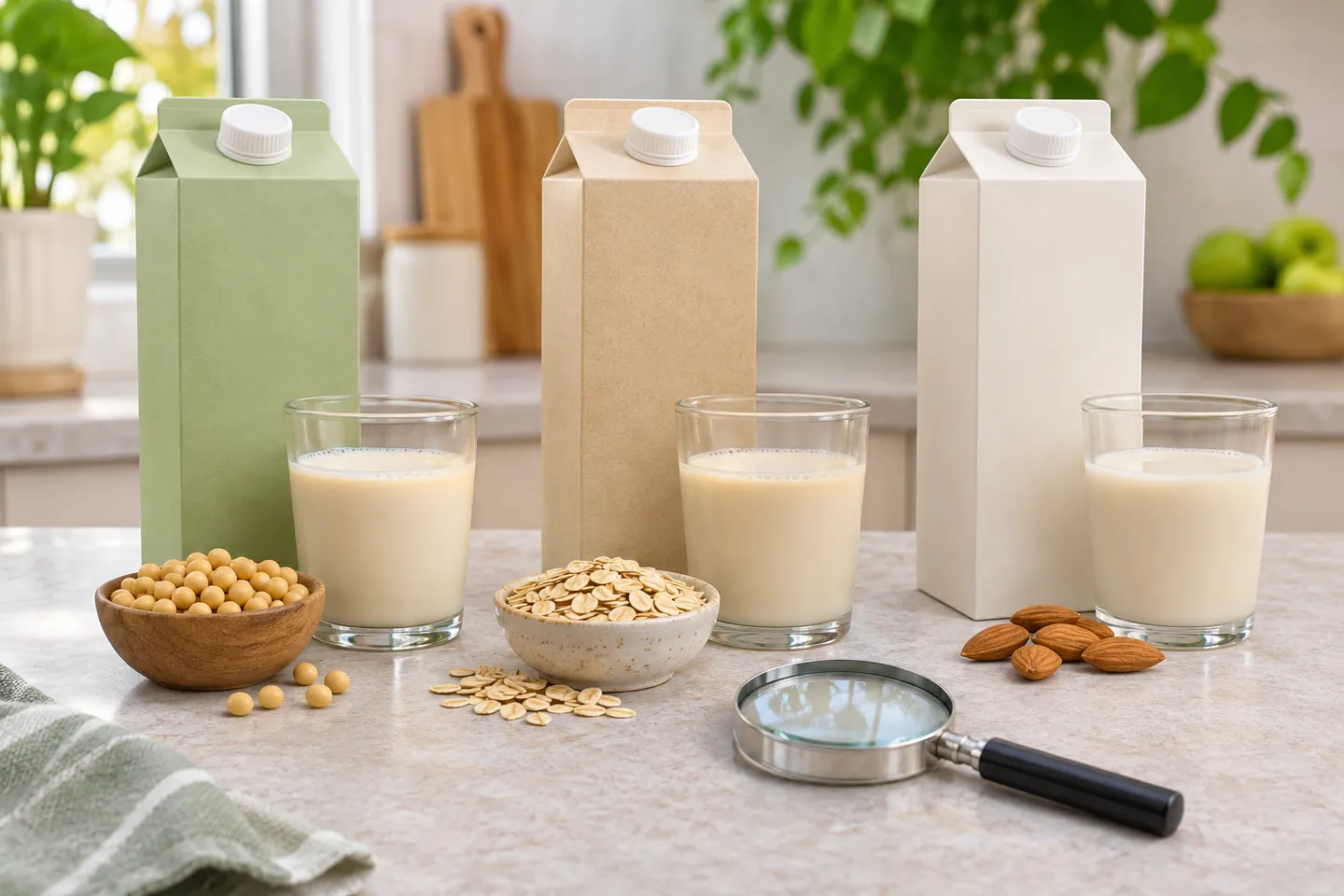
Two plant-drink cartons can look similar while carrying different amounts of protein, calcium, vitamin D and B12. A three-stop Canadian label check makes the useful differences visible.
Oat, soy, almond and other plant drinks may share a refrigerator shelf, but the word plant-based does not make their Nutrition Facts interchangeable. The useful comparison starts with the common name, moves to the serving size and ends with the nutrients that matter for the job you want the carton to do.
In Canada, fortified is not merely a cheerful front-of-pack adjective. Health Canada’s current interim fortification policy sets conditions for beverages made from legumes, nuts, cereal grains or potatoes when vitamins and minerals are added. For a product using the common name fortified followed by the plant, the framework specifies nutrients including calcium, vitamin D, vitamin B12, vitamin A, riboflavin and zinc.
The policy’s reference amounts are stated per 100 millilitres of ready-to-serve beverage: 125 milligrams of calcium, 0.85 micrograms of vitamin D and 0.4 micrograms of vitamin B12, alongside the other listed nutrients. It also deals separately with protein. A beverage that meets the other fortification conditions but not the policy’s protein threshold must carry the words Not a source of protein near its common name. That small line can be more informative than the picture on the carton.
First stop: read the common name. Fortified soy beverage and almond beverage are not automatically nutritional twins, and a plant drink without the fortified wording may have a different micronutrient profile. The ingredient list can show which vitamins and minerals were added, while the Nutrition Facts table reports what the stated serving supplies.
Second stop: match serving sizes before comparing numbers. Check calcium, vitamin D and vitamin B12 on the same volume of each product. Canada’s food-labelling rules require calcium to appear in milligrams and as a percent Daily Value in the Nutrition Facts table. Vitamin D must also appear when it has been added.
Third stop: read protein, sugars, sodium and saturated fat rather than guessing from the plant on the front. Health Canada’s food-classification system separates plant beverages with at least 2.5 grams of protein per 100 millilitres from those below that level. The practical inference is simple: if protein matters to the meal, use the grams on the label rather than assuming every carton behaves like soy.
Fortification also does not promise that two drinks will taste, foam or cook alike. Added micronutrients answer one nutritional question; the base ingredient, fat, protein, stabilizers and sweeteners answer several culinary ones. A carton can be useful in coffee yet modest in protein, or strong on calcium while being sweeter than the neighbouring unsweetened option.
Health Canada’s Food Guide points to unsweetened fortified plant-based beverages as a drink option and recommends comparing labels for sugars, sodium and saturated fat. For people eating vegetarian or vegan meals, its guidance also notes that fortified plant foods can supply vitamin B12. That is a reason to inspect the label, not a reason to treat every product as identical.
Try a sixty-second carton call at the store: confirm the common name, align the serving sizes, scan calcium, vitamin D and B12, then check protein and sweetness. Choose for the role—daily drink, smoothie, cereal, sauce or coffee—because the best carton is the one whose label and kitchen behaviour fit the task.
Sources
- https://www.canada.ca/en/health-canada/services/food-nutrition/legislation-guidelines/policies/interim-policy-on-use-expired-interim-marketing-authorizations-related-food-fortification.html
- https://inspection.canada.ca/en/food-labels/labelling/industry/nutrition-labelling/nutrition-facts-table
- https://www.canada.ca/en/health-canada/services/food-guide/explore/healthy-eating-recommendations/make-water-drink-choice.html
- https://www.canada.ca/en/health-canada/services/food-guide/explore/dietary-guidelines/applying/considerations-vegetarian-diets.html
You may also like these